
Excerpts from an article from UC Berkeley by Kara Manke
“The research is pretty darn clear that these treatments are effective — very effective,” said study lead author Scott Stephens, a professor of fire science at the University of California, Berkeley. “I hope this lets people know that there is great hope in doing these treatments at scale, without any negative consequences.”
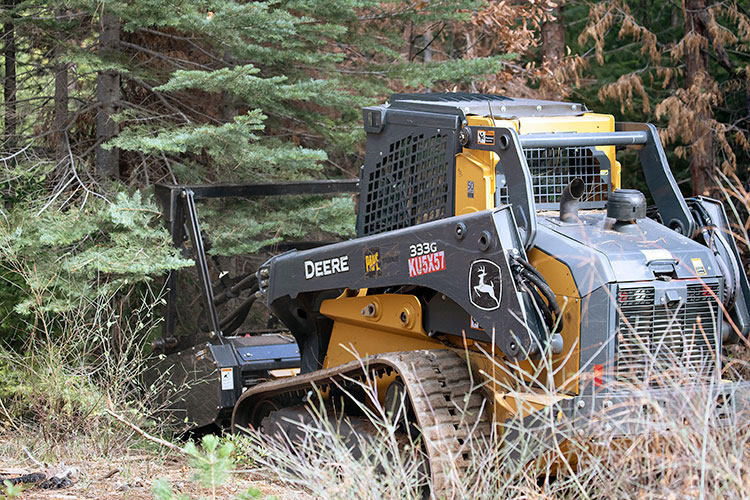
A 20-year experiment in the Sierra Nevada confirms that different forest management techniques — prescribed burning, restoration thinning or a combination of both — are effective at reducing the risk of catastrophic wildfire in California.
These treatments also improve forest health, making trees more resilient to stressors like drought and bark beetles, and they do not negatively impact plant or wildlife biodiversity within individual tree stands, the research found. The findings of the experiment, called the Fire Surrogate Study, are published online in the journal Ecological Applications.

“Our findings show that there’s not just one solution — there are multiple things that you can do to impact the risk of catastrophic fire,” said study co-author Ariel Roughton, research station manager at Berkeley Forests. “Folks can choose from different combinations of treatments that might fit their needs, and we can show them how those treatments might impact things like wildfire behavior, tree growth and carbon holding in their forests.”
